














BassBet App Download To Start Well

In 2026 BassBet is available in Italy for adult users: from mobile it is convenient to understand access, timing, balance and limits.

Fortune Gems 2 Slot

Table of Contents

  • The Dog House Megaways Slot
  • Lucky Joker 10 Extra Gifts Slot
  • Sword of Ares Slot
  • Floating Dragon Hold & Spin Slot
  • Leprechaun Riches Slot
  • Fruit Cocktail Slot
  • The Dog House Megaways Slot
  • Sword of Ares Slot
  • Fruit Million Slot
  • The Dog House Megaways Slot
  • Big Fisherman Slot
  • Big Fisherman Slot
  • Seven Books Unlimited Slot
  • BassBet Fortune Slot
  • Sword of Ares Slot
  • Floating Dragon Hold & Spin Slot
  • 9 Mad Hats Slot
  • Floating Dragon Hold & Spin Slot
  • Big Bass Splash Slot
Reviews 1

App BassBet And First Launch Without Hurry

When talking about a gaming platform to use on the phone, the first mistake is to treat it as just a desktop shortcut. In practice, the rhythm, attention span, and ease with which a short session can be extended change. On BassBet, for those who play in Italy, the first launch should be approached as a small, orderly procedure.

Imagine a very common scene. You are on the sofa, phone in hand, and you think you can sort out installation, access, and the first account check in a few minutes. Often, that's exactly where the simplest steps are mistaken. Those who start well, however, dedicate a few minutes just to that, without open messages and without haste.

Installation On Phone With A Minimum Plan

Installation should never coincide with the immediate start of a session. It's advisable to separate the two. First, set up access, check that the device is charged, verify that the connection is stable, and see if intrusive notifications might disturb you. Only then does it make sense to make the first real entry.

Think of a user who downloads everything while out and about, with low battery and a shaky signal. If something interrupts or freezes, the initial feeling immediately worsens. The simplest choice is also the most effective: install when you are stationary and have a few minutes of calm.

What to Check Before First Login

The first login isn't just for entering. It's for understanding if the account, settings, and gaming environment are readable. For this reason, an exploratory login is advisable, without the rush to deposit. Look at the profile, check where the balance, transactions, personal limits, and support are, then exit and re-enter a second time to verify that everything is clear.

Imagine completing the login while receiving codes and notifications from other apps. In that case, a wrong tap is enough to think the procedure is inconvenient, when in reality you just lack a cleaner context. The most attentive players do this: first login to orient themselves, second login to actually use the account.

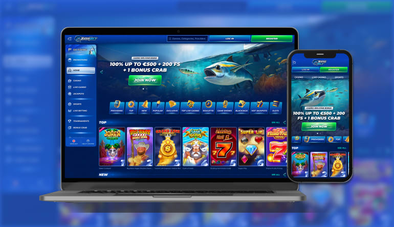
Registration And Profile Data Without Corrections Afterwards

Registration is often the most underestimated point of the entire experience. Yet, account recovery, profile verification, payment management, and the quality of support received in case of a problem depend on it. If the data is entered correctly the first time, the account remains easy to manage. If entered incorrectly, each subsequent phase brings with it a little more friction.

customer feedback 2

Imagine registering late, with your head already tired and your phone almost dead. You enter an old email out of habit, choose a password too hastily, and promise yourself to fix everything later. Usually, that 'later' comes at the worst possible moment. Those who truly care about their digital order do the opposite: fill out, reread, correct immediately.

How to Fill Out The Profile Once and Well

The best logic is simple: document nearby, phone charged, five minutes without interruptions. It seems little, but it changes a lot. A consistent profile makes any subsequent step more linear.

Imagine having to confirm personal information while already thinking about the session or balance. If the profile was built well, the answer comes almost automatically. If, however, you have to reconstruct data or figure out which number you entered, the account quickly loses fluidity.

3 reviews

Payments, Budget And Cashier To Manage With Order

The most delicate part is not the payment itself, but how you arrive at it. Many users enter the cashier without having yet decided the amount, the session time, or the maximum limit they intend to respect. At that moment, the interface becomes the loudest voice and invites immediate action. Therefore, control must be built beforehand.

Imagine opening the payment screen from your phone while you're already ready to play. You see some figures and they all seem possible. If you haven't chosen in advance, you'll end up deciding based on the moment and not based on the plan. The most orderly players do the opposite: they set the budget outside the cashier and only then enter.

Then there's the method issue. Using too many at the beginning complicates the history and makes it harder to understand what happened in case of doubt. Usually, it's advisable to choose one main method and verify each transaction immediately after it occurs.

Another practical point concerns slow screens. When a loading takes a few seconds, the instinct is to tap the button again. This is precisely where many trivial errors arise. It is better to check movements first, refresh the screen, and wait the necessary time.

Activity

What To Do Before

What to Check

Useful Habit

Account Access

Charging The Phone

Stable Network And Reduced Notifications

Entering With A Goal

Deposit

Decidere Il Budget

Metodo Scelto E Dati Corretti

Non Improvvisare L'Importo

Session

Fissare Un Tempo Massimo

Timer E Saldo Disponibile

Close As Soon As It Ends

Profile Verification

Tenere Pronte Le Informazioni

Coerenza Tra Dati E Conto

Sistemare Tutto All'Inizio

Exit

Rivedere I Movimenti

Logout E Chiusura Completa

Do Not Leave Your Account Open

This table is useful precisely because it remains concrete. If a player maintains these steps stably, they almost always reduce the most common problems: hastily chosen amounts, double operations, and unintentionally extended sessions.

When the Second Deposit Changes the Tone of the Session

The first deposit is usually part of the plan. The second is not. It often arises from a reaction: a desire to stay a little longer, an attempt to recover immediately, or annoyance at a session that did not go as planned. It is at this moment that the player understands whether they are still following a plan or if they have started to chase the situation.

Imagine you have already used the decided amount and feel the idea that a small extra top-up could fix the evening. It's a common thought. Precisely for this reason, it is worth deciding on a very clear rule beforehand: only one top-up per session, or none beyond the initial one.

Game Catalog and Brighter Choices

A mobile platform works well when it doesn't push you to change direction every two minutes. Variety is useful, but on a phone it can become a distraction. You open a section, go back, try another, and at the end of the session, you no longer remember what idea you started with. That's why it's best to decide on the type of experience you want beforehand.

Imagine you have forty free minutes after dinner. In theory, you just want to relax. In practice, if you open everything without a direction, you turn that time into a sequence of disconnected choices. More attentive players make a minimal selection: they choose a category, stay there long enough to understand it, and only then consider changing.

Choose a Category and Stick to It Long Enough

Constantly changing games seems harmless, but it often breaks control. Each new screen restarts attention and pulls you away from the initial plan. Staying a bit longer in the same category, however, makes the session more readable.

Imagine a user who enters, opens a slot, closes it almost immediately, moves to a table, and then goes back. After ten minutes, they've done a lot, but without really understanding anything. A clearer choice is to limit changes at the beginning.

Short Sessions Without Losing Track

Short sessions seem easy to manage, but they are often the most deceptive. On a phone, time passes almost invisibly. Fifteen minutes become thirty without the player truly feeling a phase change. That's why an external framework is needed: a timer, a final time, a very simple goal.

Think of a break before going out. You want to play a little, perhaps just to break up the day. If you enter without a time limit, the phone makes it too easy to stay a bit longer. Those who know themselves well usa a minimal structure: decided time beforehand, clear balance, exit already planned.

When to Stop and Close Without Immediately Returning

The end of the session counts almost as much as the beginning. Many think they have closed when they stop playing. In reality, they have truly closed only when they check their movements, log out of their account, and put distance between themselves and the phone. As long as the platform remains open in the background, the return is too quick and too poorly thought out.

Imagine you've just finished a session. If you leave the app open while browsing other content, a moment of boredom is enough to re-enter. More organized players use a small final sequence: they check their balance, log out, close everything, and change activities.

Security, Privacy, and Digital Habits

Mobile security doesn't just depend on the platform. It also depends on how you use the device. Screen lock, biometric access, visible notifications, saved passwords, and continuous switching between different networks: every detail changes the level of control you feel over your account.

Imagine sharing a table or sofa with other people and leaving your phone on after a session. A too-readable screen or a notification appearing at the wrong moment is enough to lose privacy. An attentive user doesn't just protect their password. They also protect the context in which usa the platform.

In some cases, it is even advisable to make logging in slightly less immediate. It seems counterintuitive, but for those who tend to enter impulsively, removing some automatisms can be useful.

Notifications, Screen, and Logins to Manage Better

Notifications are a delicate point. They can break concentration during a session, but also bring you back into the account when you had already closed it. For this reason, it is worth deciding precisely which alerts to leave active and which not.

Imagine you have just finished and immediately receive a reminder on your phone. If the boundary is already fragile, re-entry becomes almost automatic. Those who truly care about their control reduce superfluous stimuli.

Support Messages That Really Help

When assistance is needed, the way you describe the problem matters a lot. A message like "it doesn't work" expresses frustration but doesn't help understand the context. It is much better to indicate what you were doing, with which device, on which network, and at what point in the journey you were.

Imagine two users with the same snag. The first sends a dry riga. The second explains that they were trying to log in from their phone, after a connection change, while checking their account movements. Almost always, the second one gets a more useful answer.

Responsible Gaming In Italy In 2026

In 2026, talking about responsible gambling only makes sense if it remains concrete. BassBet is available in Italy for adult users, and this means its use must be kept within clear personal limits, real breaks, and pre-determined choices. It is not enough to say you will play in moderation. You need to understand how to turn that phrase into repeatable habits.

Imagine a bad evening. You are nervous, you open your phone more to distract yourself than by choice, and you think you will only stay in the account for a few minutes. It is precisely in these moments that it is advisable to stop and ask yourself if the session is arising from a plan or a reaction.

Control tools serve this purpose. Spending limits, temporary breaks, always visible history, and self-exclusion if necessary are not obstacles to gambling, but tools that bring the account back within a more manageable perimeter. The most organized players do not rely solely on the will of the moment. They prepare the context beforehand that will help them respect their limits.

A very useful practice is to separate administrative time from gaming time. One day you can log in only to check your balance, movements, and settings. Another day, if you wish, you can dedicate a specific time slot to a session. When these functions remain separate, the platform occupies less mental space.

The rhythm of the week also counts. Those who open their account too many times from their phone without a specific reason risk not noticing the repetition. That is why some people find it useful to establish recognizable time windows or voluntary breaks between sessions.

In the end, the point is not to use mobile little or much in abstract. The point is to understand if you are still the one deciding. If the budget is defined, time has a limit, and the exit is clear, then the environment remains under control.

FAQ

Good preparation starts with three very simple things: sufficient battery, stable connection, and a clear objective. First, decide if you just want to check your balance, make a deposit, or dedicate a specific time to gaming. Then set a spending limit and, if it helps you, a timer too. This order reduces errors and makes the session less impulsive.

Because the choice made before the checkout is almost always clearer than the choice made within the payment screen. When you are already ready to start, the interface tends to push you towards a quick action. If, however, you arrive with an already decided amount linked to a specific gaming time, the deposit remains just a technical step and does not become the moment where you improvise.

The most useful rule is not to repeat the command immediately. First, it is advisable to check the account movements, wait for the screen update, and understand if the action has already been registered. Many problems arise precisely from the second attempt due to haste or nervousness, not from the initial small delay.

An external framework is needed, because on the phone time passes in a barely visible way. A final time, a timer, and a precise objective are often enough to keep the session within the chosen limits. Without this structure, it is much easier to go from a quick account check to a long and unplanned stay.

When the desire to add funds arises from reaction and not from the initial plan. If you have already exhausted the decided budget and feel the need to stay longer to recover immediately or change the course of the evening, it is probably time to close. Taking a break and deciding later helps much more than an impulsive reload.

It is not enough to stop playing. It is advisable to check the balance and essential movements, log out, truly close the app or browser, and change activities for a few minutes. Even a simple gesture, like getting up or moving the phone to another room, helps to make the final boundary clearer and reduces the automatic return to the platform.