BassBet Promo Code and Promo Code BassBet

In 2026, anyone opening an account on BassBet in Italy wants to activate offers, manage their budget, and get started without confusing steps.

Fortune Gems 2 Slot

Table of Contents

  • The Dog House Megaways Slot
  • Lucky Joker 10 Extra Gifts Slot
  • Sword of Ares Slot
  • Floating Dragon Hold & Spin Slot
  • Leprechaun Riches Slot
  • Fruit Cocktail Slot
  • The Dog House Megaways Slot
  • Sword of Ares Slot
  • Fruit Million Slot
  • The Dog House Megaways Slot
  • Big Fisherman Slot
  • Big Fisherman Slot
  • Seven Books Unlimited Slot
  • BassBet Fortune Slot
  • Sword of Ares Slot
  • Floating Dragon Hold & Spin Slot
  • 9 Mad Hats Slot
  • Floating Dragon Hold & Spin Slot
  • Big Bass Splash Slot

Why BassBet Promo Code Really Matters at the Start

An initial incentive isn't just to boost your first login. It's mainly to bring order to your initial decisions: how much to deposit, which method to use, when to stop and carefully read your profile, and how to set up a sustainable session. Imagine the scene: you're on the couch, you have a few free minutes, you open the platform, and you want to understand if you're taking the right steps or if you're rushing too much.

Promo 1

Whoever usa a platform available in Italy for adult users usually gets better results when they treat the initial offer as a practical step and not as bait. First, look at the big picture, then decide whether to actually activate it. This difference may seem small, but it changes how you start.

In 2026, many users make a repeated mistake: they see the benefit, immediately think about the deposit, and only later wonder how the account works. The most useful sequence is the opposite. Open your profile, check the limits, define a reasonable amount, and only then consider the first financial step.

Registration, Profile, and Initial Operational Choices

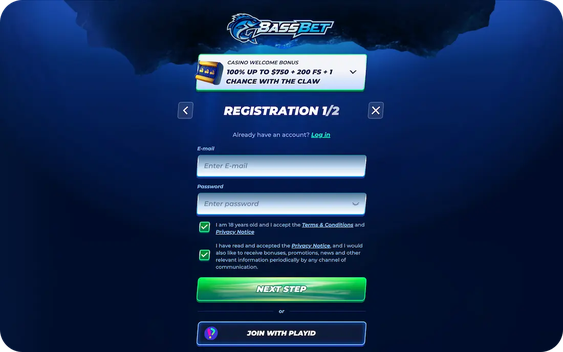
Registration should be simple, but it shouldn't be approached with the mindset of "I'll do it all in a minute." When you open a gaming account, every detail entered at the beginning matters later on: login, confirmations, balance management, and any support requests. If you enter a detail incorrectly or skip a check, the problem won't explode immediately, but it will appear at the least convenient moment.

promotional offer 2

Imagine registering while you're doing something else, with notifications coming in and little concentration. That's usually where small errors are made. More organized users prefer to separate the phases: first opening the profile, then a quick check of the personal area, and finally the decision on depositing. It's a less impulsive rhythm, but much more manageable.

How to Manage Promo Codes BassBet Calmly

When the field for the code or the offers section appears, the temptation is to enter everything immediately and move on. Instead, it's worth pausing for a moment and reading the summary before confirming any financial transaction. Imagine you've already chosen the amount, but haven't yet checked if the profile is complete: this alone is enough to understand why haste doesn't help.

Usually, those who do best follow a short routine. They open the account, check the settings screen, look for the point to activate the bonus, and only then consider the deposit. It's not slowness. It's precision applied to the first few minutes.

Account Verification and Personal Data

Profile verification isn't an exciting topic, but it's one of the most useful. An account with clear data and properly completed confirmations makes subsequent operations more straightforward, especially when you want to switch between devices or review balance movements without doubts.

If you imagine a user logging in from a computer in the afternoon and from a smartphone in the evening, you immediately understand the value of an account that's organized from the start. A sensible password, consistent data, basic checks completed: nothing spectacular, but all very concrete.

Budget, Method, and First Deposit

The first deposit should never be decided by how interesting an offer sounds. It should be decided by your real budget. First, set an amount that doesn't disrupt the rest of your week, then choose a method you know well, and only then proceed. Imagine starting with too high an amount just to "better utilize" the bonus: it's almost always a sign that you're letting the promotion guide the session, and not the other way around.

The method also matters more than it seems. If you use a tool you already know, reading the transaction and checking the spending becomes more natural. If, however, you choose something unfamiliar just because it seems quick, you risk losing clarity precisely when you need it most.

A Practical Table to Decide Without Rushing

When entering a platform for the first time, having a small guide helps to remove noise. A long manual isn't needed. A concrete reminder is. Imagine you're about to complete the deposit and want to understand in ten seconds if you've checked the right things: a support table, at that moment, is worth more than an abstract explanation.

Promo 3

Step

What to Look At

Why It's Useful

Profile Opening

Correctness of entered data

Avoid subsequent corrections and slowdowns

Personal Area

Available spending and time limits

Helps build a more organized session

Payment Method

Familiarity and transaction control

Reduces errors and improves budget readability

Balance Summary

Difference between available funds and recent transactions

Avoids misinterpretations

End of Session

Pause, closure, and account review

Helps avoid staying logged in out of inertia

After reviewing these points, the procedure becomes easier. Not because the platform changes, but because your way of approaching it changes. Problems usually arise less from the functions and more from the pace at which the user goes through them.

BassBet Casino Promo Code and Balance Management

After activating the initial offer, attention shifts to the balance. And this is where many let their guard down too soon. Imagine you've finished the part you considered "important" and think the rest will take care of itself. In reality, this is precisely the moment when it pays to check more closely what you have in front of you: available funds, recent transactions, current session, and any active limits.

A poorly read balance can lead to wrong decisions. That's why it's useful to get used to a simple rule: re-read the summary at the end of each important phase. First after the deposit, then after the session, then when you decide whether to stop or continue later.

Mobile, Quick Access, and Short Sessions

By 2026, a very large portion of usage will shift to smartphones. This makes everything more convenient, but not always clearer. The small screen encourages fast scrolling, less reading, and confirming before necessary. Imagine being away from home, with low battery, a less-than-perfect connection, and the desire to do everything in two minutes: it's a combination that favors the most trivial errors.

To use the platform well on mobile, two or three concrete habits are needed. The first is simple: scroll to the bottom before confirming. The second is to double-check the summary, especially when it concerns the balance or a financial transaction. The third is to decide in advance whether this will be a quick session or a longer login. When you know this beforehand, you navigate the interface better.

Chi usa il telefono con ordine di solito non apre dieci sezioni insieme. Sceglie un obiettivo, fa il controllo necessario, chiude quando aveva deciso di chiudere. È una disciplina minima, ma fa molta differenza.

From Smartphone Without Rushing

The smartphone works very well for quick checks, brief logins, and light sessions. It works less well when you want to read everything in a hurry while doing something else. If you imagine being on a lunch break or on a train, you immediately understand the risk: you tap a button before you've really seen the entire screen.

Therefore, during the first sessions, it's advisable to use the phone as a practical but not impulsive tool. Open your profile, check the right section, verify the summary, and only then choose what to do. In many cases, thirty seconds more are enough to avoid an error that later requires ten minutes to clarify.

Support, Clarity, and Right Questions

Support is especially useful when used precisely. There's no need to write long, vague messages. You need to clearly explain the exact point where you got stuck: login, summary, account settings, balance movements, limits, or break. Imagine writing "it doesn't work" at the end of the day, tired and without details: you'll probably get a response asking for more information. If, however, you come with a targeted question, the process is shortened.

Here too, a practical rule applies: observe first, then ask. Re-read the screen, check if the doubt concerns the profile or the transaction, then formulate the request. Many users don't need huge explanations. They need to name the problem correctly.

How to Ask for Help Effectively

A good request for help has three elements: the step you are on, what you expected to see, and what you actually found. It seems trivial, but it immediately clarifies the situation. Imagine having to write when you're short on time: two ordered sentences are enough to describe the precise point where you're stuck.

Break, Timeout, and Self-Exclusion

These tools are not just for difficult moments. They are also for beforehand, when you want to avoid relying on improvisation. If you know you tend to extend your session beyond what's planned, setting a break or a temporary limit is a very practical choice, not an extreme measure.

Usually, the most lucid users consider them part of the routine, not the last resort. Imagine an evening where you thought you'd stay twenty minutes and an hour later you're still logged in. In that case, having a break already set helps you respect a decision made with a cooler head.

Signs Not to Ignore During the Session

There are signs that appear before the real problem. You start changing amounts without a clear reason, misread the balance, open multiple sections just to stay active, or continually postpone closing. If you recognize yourself in any of these situations, stopping is not giving up. It's a course correction.

Imagine a session that started out of curiosity and became longer than expected. Almost always, the turning point is noticed earlier but ignored. That's why it's good to train yourself to see those signs when they are still small.


Opinions, Personal Routine, and Responsible Use in 2026

Useful opinions are not the loudest ones. They are the ones that explain how a real person used their account: registration, first login, budget management, breaks, relationship with the balance, support when needed. In 2026, this is even more true, as many users arrive already accustomed to fast interfaces and synthetic promises. Precisely for this reason, they need a more concrete criterion to judge the experience.

Imagine two players. The first enters without a plan, tries three sections, changes the amount, continues as long as they feel like it, and then says the platform is "confusing." The second decides on an amount, a duration, a simple goal, and a final break. Which of the two will truly understand how the account works? Usually the second, because they have built a readable context to evaluate what they see.

Una routine personale non deve essere rigida, ma deve esistere. C'è chi preferisce entrare solo da computer, chi usa il telefono solo per controlli rapidi, chi tiene una soglia fissa per ogni settimana, chi si dà un tempo massimo per ogni sessione. Nessuna di queste soluzioni è universale. Il punto è sceglierne una e mantenerla abbastanza stabile da poter osservare se funziona.

How you end a session also counts. Many only think about the beginning: registration, offer, deposit. In reality, the closing says much more. If you re-read the balance, check the transactions, and calmly decide whether to return another day, you are using the platform much more consciously.

Finally, there's an aspect that often goes unnoticed. A platform isn't judged solely in the first five minutes. It's judged over time, as you repeat the same actions and see if they remain clear. Login, profile, limits, session, break, final check: if the flow remains readable, the experience truly improves.

FAQ

The best time is when you have enough attention to read the initial steps carefully. If you register while doing something else, the chances of skipping a useful detail or having to correct a wrongly entered piece of data immediately afterward increase. It's usually advisable to open an account when you can dedicate a few full minutes to the operation, without rush and without continuous distractions.

It counts a lot, as it determines everything else. If you choose a sustainable amount before entering, the session already has a clear boundary. If, instead, you decide the amount while already inside, you risk adapting it to the mood of the moment. A predefined threshold also makes it easier to choose a break, check the balance, and know when to stop.

It depends on what you need to do. The phone is great for quick logins, fast checks, and short sessions, while the computer helps when you want to read screens and settings more calmly. Many users find a simple combination useful: computer for setup and checks, smartphone for lighter access later on.

The first useful thing is to stop. Then it's advisable to re-read recent transactions, check your profile status, and distinguish between available funds and operations still in progress. If you continue without understanding, you only increase confusion. In practice, a short break and an orderly re-read solve more doubts than you might think.

It makes sense when you already know you might go over the time you decided on. A scheduled break takes the pressure off the moment-to-moment decision and protects the session's rhythm. You don't need to wait until you feel out of control. In fact, it works best when you set it up beforehand, with a clear head, as a normal part of account management.

Because they treat the beginning as a formality. Instead, it's the phase where almost all subsequent habits are decided: how much to deposit, how to read the balance, when to close, how to ask for help if something doesn't add up. Just a few minutes handled well can make the rest of the experience much easier.

You notice it through very practical signs. You log in without rushing, read the summary better, don't change amounts without reason, know when to stop, and don't leave the session feeling like you've lost the thread. A useful routine doesn't have to be perfect, but it should make your account clearer and your behavior more predictable.